
A leading paper & pulp group connects factory logistics to port operations
This paper group operates at a scale where port handoffs matter — every hour a truck spends queuing outside a terminal is revenue leaving the building. NiuInfo deploys an open, collaborative freight platform that unifies inbound raw material, inter-plant production, and outbound distribution — and integrates directly with port systems to automate appointment, entry, loading, and exit handoffs.
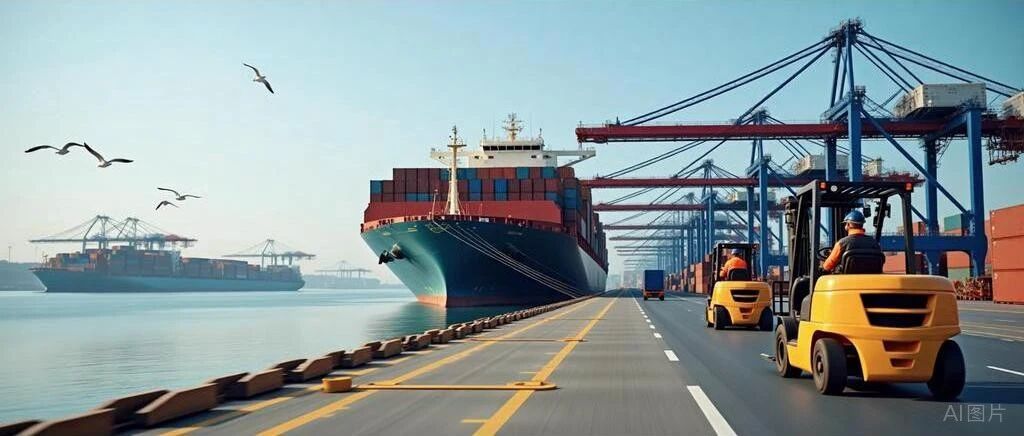
Where the operating loss was hiding
Paper and pulp manufacturing runs on a rhythm: raw materials in, pulp converted, finished goods shipped — much of it moving through ports on both ends. For a group of this scale, even modest inefficiency at port handoffs compounds into real numbers: trucks queuing for hours, missed berth windows, retrospective paperwork chasing events that already happened.
The group had spent years running a federation of systems — one for inbound, another for production-line logistics, a third for finished goods distribution, and none of them talking cleanly to the ports. The executive sponsor’s framing was direct: we don’t have a logistics technology problem; we have a silo problem that costs us real money every week.
What NiuInfo deployed
After a rigorous vendor selection, the group chose NiuInfo to build an open, collaborative freight platform spanning the full supply chain:
Upstream integration. Direct connection to raw material suppliers: real-time data exchange, visible inbound shipments, and transparent factory-gate flow. The group’s procurement, inbound logistics, and plant operations finally share one picture.
Downstream orchestration. The platform manages the downstream carrier network: capacity sourcing, dispatch, in-transit visibility, exception handling, and settlement. Each plant can participate in shared carrier pools without losing local control.
Port system integration — the distinctive capability. This is where the deployment went beyond what most TMS platforms attempt. NiuInfo integrates directly with port information systems, automating the full sequence:
- Appointment — slot booking synced between TMS and port system.
- Entry — truck identification at the gate, auto-validation against the booking.
- Loading — loading-bay coordination, document flow, weight capture.
- Exit — automated release and data reconciliation.
The handoff that used to require phone calls, paperwork, and human follow-through happens through integrated workflow events. Trucks move in minutes where they used to wait in hours.
A National Industrial Internet pilot
The project is recognized as part of a National Industrial Internet pilot program — not a label that gets awarded to incremental upgrades. The designation reflects something larger: NiuInfo’s approach to bridging enterprise logistics and public freight infrastructure (ports, highway systems, regulatory platforms) is being studied as a reference architecture for the broader industry.
Why a global-scale buyer chose NiuInfo
A group with operations in dozens of countries has pick of TMS vendors. Three factors tipped the decision:
- Depth in manufacturing logistics. NiuInfo’s client list — pharmaceutical, steel, ports, auto, rail — reflects sustained experience in operationally demanding industries. Not just “we have reference customers” but “we have deployments running at the operating tempo your business requires.”
- Openness of the platform. Upstream suppliers, downstream carriers, and port systems are all different ecosystems with different protocols. A closed TMS architecture would have re-created the silo problem in a shinier tool. NiuInfo’s open integration model was the architectural fit.
- Elastic scalability. A system that runs well at one production base is not automatically the right fit for a group-scale deployment. NiuInfo’s platform is engineered from the start for enterprise scale — and the track record backs it up.
Why this matters for paper, cement, and bulk manufacturers
Two lessons from this deployment travel directly to any industrial group moving large outbound volumes through ports:
- The port handoff is an addressable problem. Most manufacturers treat port dwell time as “weather” — unavoidable and unimprovable. Direct TMS-to-port integration reframes it as an operations problem with a technical solution.
- Pick a platform that spans your whole supply chain, not just one segment. The moment your TMS ends at the plant gate, you’ve created a new reconciliation problem. The best deployments compress inbound, inter-plant, and outbound onto the same operating surface.
Products mentioned