
Powering the logistics backbone for 120,000 field engineers — Egenius Group goes live on NiuX TMS
When your operating frontline is 120,000 engineers spread across 2,800+ counties, the limiting factor isn't who can fix the device — it's whether the right spare parts are in their hands when they knock. Yuntong chose NiuX TMS as the logistics spine that moves consumables, spare parts, high-value tools, and reverse-flow recovery across an entire country — down to the last mile.
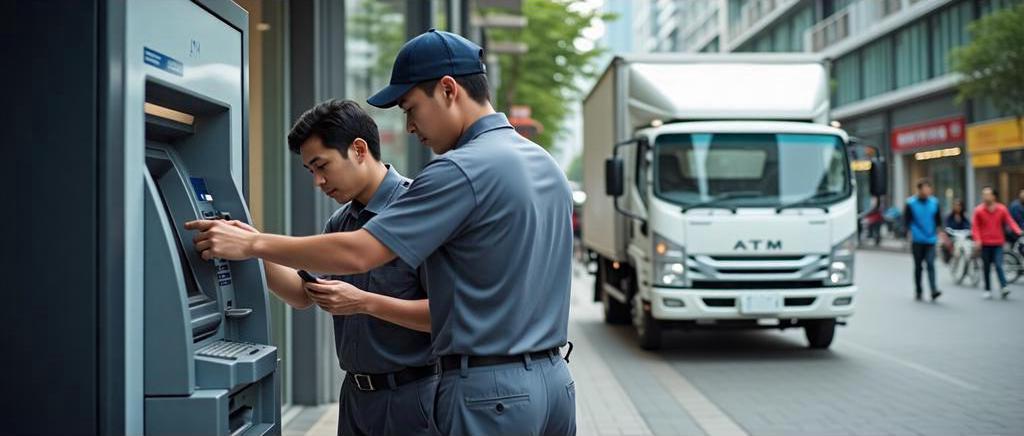
The shape of the problem: logistics for field service, not for freight
Most transport management systems were designed around a specific mental model: orders flow in one direction, trucks carry palletized loads, delivery confirms completion. That model breaks the moment you try to apply it to field service logistics at country scale.
Yuntong’s operation looks structurally different:
- The delivery unit is one engineer and a small parts kit, not a truck and a pallet.
- Demand is stochastic, not planned — a device fails somewhere in rural China, an engineer is dispatched, parts need to be in hand within the service-level window.
- Inventory is distributed across thousands of locations — central warehouses, regional depots, city-level service providers, even engineer-held rolling inventory.
- Reverse flows matter as much as forward flows — defective parts, traded-in units, high-value tools all need to come back through tracked channels.
The traditional “pick a national carrier and integrate with their API” approach doesn’t survive contact with this operating model. Yuntong needed a logistics operating system, not a shipping tool.
What NiuInfo deployed
The project is built around NiuX TMS as the execution backbone, connected to Yuntong’s existing ERP, service ticketing, inventory, and financial systems through a flexible API layer. Four operating patterns are handled in one platform:
1. Multi-mode forward delivery. FTL for depot-to-depot trunk moves. LTL for standard replenishment to city service centers. Same-city instant delivery for urgent spare parts reaching the engineer before the appointment window closes. One dispatch workflow, one tracking surface — operators don’t care whether the underlying leg is a dedicated truck or a courier service.
2. Reverse logistics as a first-class workflow. Returns, refurbishment pickups, and high-value tool recovery run through the same platform as forward shipments. Every reverse event has an owner, an SLA, and a closed-loop reconciliation against the forward shipment it relates to.
3. High-value consumable tracking. Some field service parts are expensive enough that loss leakage becomes material. The platform provides item-level tracking through the full service loop — from central warehouse, to engineer, to installation, to scrap certificate.
4. API-first integration with 10+ existing systems. Yuntong’s IT landscape — built over years of scale — includes ERP, service ticketing, inventory management, financial settlement, customer-facing mobile apps, and more. NiuX TMS was chosen specifically because it integrates into that landscape instead of demanding replacement. Data, physical flow, and money flow stay synchronized across the full ecosystem.
The architectural bet: “All in one, All online” — done properly
Yuntong’s strategic narrative is “All in one, All online” — a commitment that their 120,000 engineers and 5,000 service partners should experience a single, always-on digital operating environment. Logistics had been the weakest link in that vision.
The decision to pick NiuInfo came down to three attributes the internal team articulated during selection:
- Scenario depth. FTL, LTL, same-city instant, reverse, and high-value tracking in one platform — not five.
- Integration openness. A flexible API surface meant integration timelines measured in weeks, not quarters.
- Platform elasticity. The service network is still growing. A platform that scales gracefully as coverage deepens mattered more than any single feature.
Why this story matters for service-heavy operators
If your business is service-led — after-sales, installation, maintenance, field engineering — the logistics model looks nothing like classic distribution. Two takeaways from the Yuntong deployment apply directly:
- Don’t force service logistics into a distribution TMS. The mental model — one truck, one route, one pallet — will actively fight your operating reality. Choose a platform that treats same-city urgent, scheduled replenishment, reverse, and tracked high-value as equal first-class flows.
- Integration posture is a strategic choice. The TMS that demands replacement of your surrounding systems is optimizing for the vendor’s architecture, not yours. The TMS that integrates cleanly into your existing landscape is optimizing for your operating reality.
Products mentioned